
In today’s ever-changing financial landscape, developing a Personal Income Plan is not just a luxury but a necessity. Whether you are navigating the early stages of your career, planning for retirement, or seeking ways to maximize your income, having a solid income strategy can significantly impact your overall financial well-being. This article, entitled Creating a Personal Income Plan That Works, offers insightful guidance and practical steps to help you craft a personalized plan that aligns with your unique financial goals. Discover how to balance your earnings, manage obligations, and set achievable financial objectives to ensure a stable and prosperous future.
Understand Your Main and Secondary Income Sources
Having a robust personal income plan necessitates a clear understanding of your main and secondary income sources. Your main income source typically refers to your primary job or occupation, which provides the majority of your financial resources. It is essential to assess the reliability and sustainability of this income source, as it forms the backbone of your financial stability.
On the other hand, secondary income sources, often referred to as “side incomes“, play a crucial role in enhancing your financial resilience. These can include freelancing gigs, investment returns, or rental income. Identifying and nurturing these streams is pivotal as they offer financial flexibility and can provide a cushion during unforeseen economic downturns or emergencies.
To effectively differentiate between these income types, one must scrutinize factors such as dependability, growth potential, and the time investment required. While main income usually demands more substantial time commitment and offers less flexibility, secondary income often provides opportunities for diversification and can be scaled according to personal capacity. Understanding these dynamics is key to crafting an effective and sustainable income strategy.
List Income vs Expenses Clearly Each Month
Creating a comprehensive list of income versus expenses each month is essential for a functional personal income plan. Establishing a clear overview helps in identifying areas of improvement and ensures financial stability.
Begin by documenting all sources of income, whether from a paycheck, freelance work, or passive income streams. It’s crucial to list the amounts and dates when they are expected. This will provide a clear picture of your financial inflows.
Next, outline your monthly expenses. Categorize them into essential and non-essential expenditures, such as housing, utilities, groceries for essentials, and dining out or entertainment for non-essentials. Doing so will help in identifying which expenses are flexible if adjustments are necessary.
Using a budgeting tool or spreadsheet can significantly aid in maintaining an organized list. This method allows for easy comparison of income against expenses and helps identify any discrepancies.
Finally, review and update your list regularly to ensure it reflects any changes in income or expenses promptly. Consistency will aid in making informed financial decisions and achieving financial goals.
Forecast Future Income Based on Trends
When crafting a personal income plan, it is crucial to anticipate future earnings accurately. By analyzing current economic trends, you can make informed predictions and prepare accordingly.
Start by examining industry-specific trends. If you are in a field that is rapidly evolving, such as technology or healthcare, pay attention to market demands and emerging skill requirements. These factors will likely influence salary structures and employment opportunities.
Consider the economic climate at large. Factors like inflation rates, unemployment levels, and fiscal policies can affect income growth and stability. Staying updated with economic forecasts will help you adjust your financial expectations wisely.
Another essential aspect is to evaluate personal trends in your career. Reflect on your past and current income patterns. Recognizing times of increments or consistency can aid in projecting future financial positions and setting realistic goals.
Lastly, technological advancements and automation continue to reshape job markets. Monitor these developments to understand their potential impact on your professional landscape and income trajectory.
By leveraging these insights and maintaining an adaptable mindset, you can enhance your ability to forecast future income effectively, ensuring your personal income plan remains relevant and robust.
Set Monthly Income Goals and Track Them
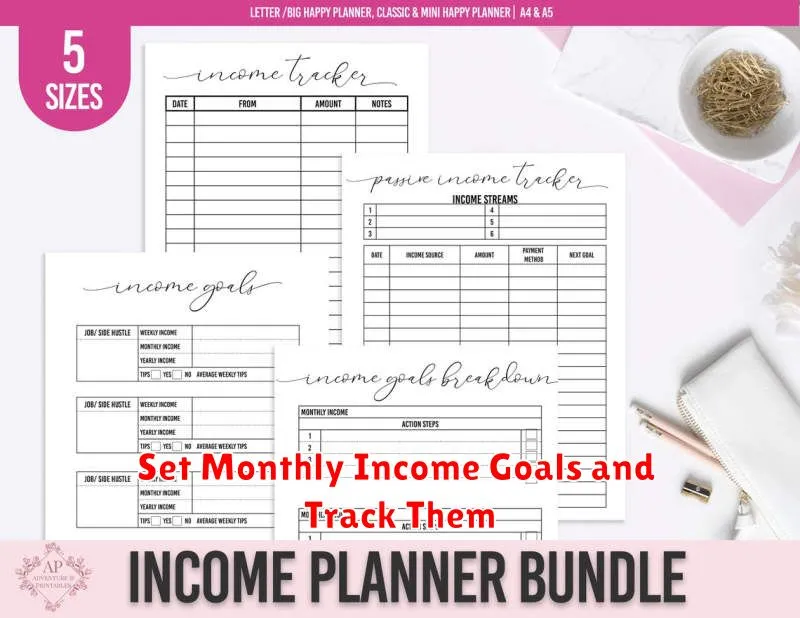
Establishing monthly income goals is an essential step in creating a personal income plan that is effective and sustainable. By setting clear and realistic targets, individuals can strategically plan their finances, ensuring they are aligned with both short-term needs and long-term aspirations.
Begin by evaluating your current financial situation and identifying areas where improvements can be made. Take into account your regular expenses, debt obligations, and any additional savings targets you have set for the future. This comprehensive understanding will aid in formulating a monthly income goal that is challenging yet reachable.
Once the goals are set, it is crucial to implement a reliable tracking system. This might include using financial management software or spreadsheets to monitor income sources and compare them against your targets consistently. Regularly reviewing this data will provide insights into your progress and help identify potential adjustments necessary to meet your income objectives.
Adopting this disciplined approach not only enhances financial stability but also fosters a proactive mindset towards income management. By keeping track of monthly income goals, one can stay focused and motivated, ultimately creating a more effective personal income plan.
Diversify Income to Increase Stability
In today’s dynamic economic landscape, relying solely on a single source of income can be precarious. By diversifying income streams, individuals can promote financial stability and reduce vulnerability to unexpected financial fluctuations.
A varied income portfolio might include multiple components such as investments, freelancing, rental properties, or side businesses. Each has the potential to provide additional revenue that can buffer against the uncertainties of a primary income source.
This strategy ensures a more secure financial future by spreading risk and increasing opportunities for growth. In essence, diversification acts as a financial cushion that enhances resilience against market or job disruptions. Therefore, actively seeking out and cultivating alternative income avenues is crucial for those aiming for long-term financial security.
Use Spreadsheets or Apps to Monitor Progress
In the journey of crafting a Personal Income Plan, one crucial aspect is maintaining a clear and accurate record of your financial changes. Leveraging spreadsheets or apps can streamline this process, offering a structured way to track progress and make necessary adjustments.
Spreadsheets, such as those made in Microsoft Excel or Google Sheets, provide a customizable platform where you can input your income and expenses. They offer the flexibility to create formulas that automatically calculate totals and averages, giving you a consistent view of your financial status. This automation reduces the risk of human error and ensures the data is up to date.
On the other hand, financial apps are designed to simplify tracking by offering intuitive interfaces and real-time updates. Applications like Mint or YNAB allow you to categorize transactions, set alerts for upcoming bills, and even link directly to your bank accounts for seamless monitoring. This real-time capability helps you to quickly understand your spending habits and income flow.
Both methods have unique advantages and can significantly contribute to the effective implementation of a Personal Income Plan. Whether you choose spreadsheets or apps, the key is consistency and accuracy in tracking your progress. This approach not only enhances your financial awareness but also empowers you to make informed decisions to achieve your financial goals.
Revisit and Adjust Plan Every 90 Days
Implementing a personal income plan requires not only strategic initial planning but also continuous evaluation and adjustment. One effective approach is to revisit your plan every 90 days. This interval provides a realistic timeframe to monitor progress, address unexpected financial changes, and incorporate any new income opportunities.
During each review, examine your current financial standing against the objectives set in your plan. Evaluate whether you’re meeting your targets or if adjustments are required. This evaluation should include examining both income sources and expenditures to ensure they align with your long-term financial goals.
Adjustments may involve recalibrating spending habits, finding additional income streams, or revising your savings strategy. Being proactive in making these changes ensures that your plan remains effective and continues to serve your financial interests.
In addition to numerical assessments, reflect on any personal or career developments that might impact your finances. For example, a promotion, a significant change in expenses, or a new family addition may necessitate a strategic plan adjustment. Having the flexibility to make these changes every 90 days helps you stay prepared and empowered to meet your evolving financial needs.
